AcreageTractorBook.com · Videos
Hydrostatic vs Gear Tractor: What You Feel on a Loader
 From Sam Trudou's video24 September 2026
A salesman will tell you hydro and gear both work. He is right, and it does not help. Here are the five checks that decide it for loader work, and the lines that send you home without signing.
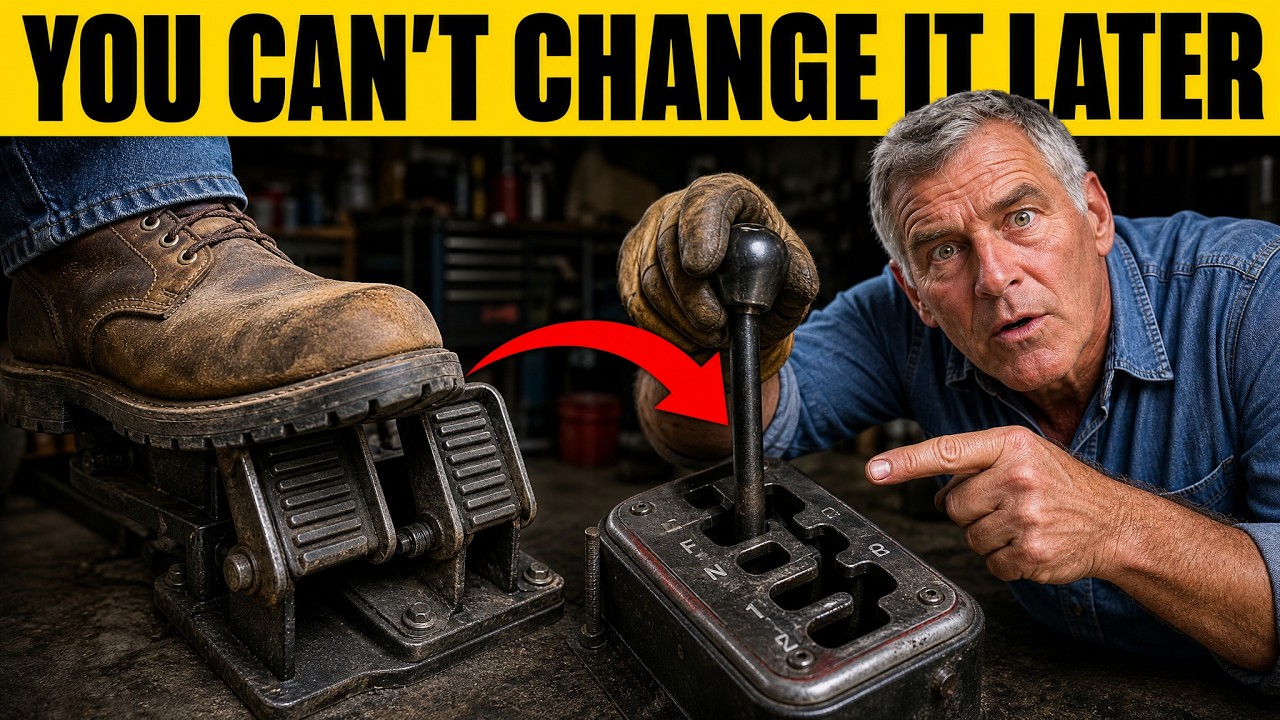
Watch a bucket go into a gravel pile: into the pile, back out, forward to a low spot, back away. Four direction changes to move one bucket, and that is what you feel on a loader when you pick hydro or gear.
This is for you if you have one to ten acres, loader work on your list, and two machines to choose between. Tires you can swap later. The transmission you cannot.
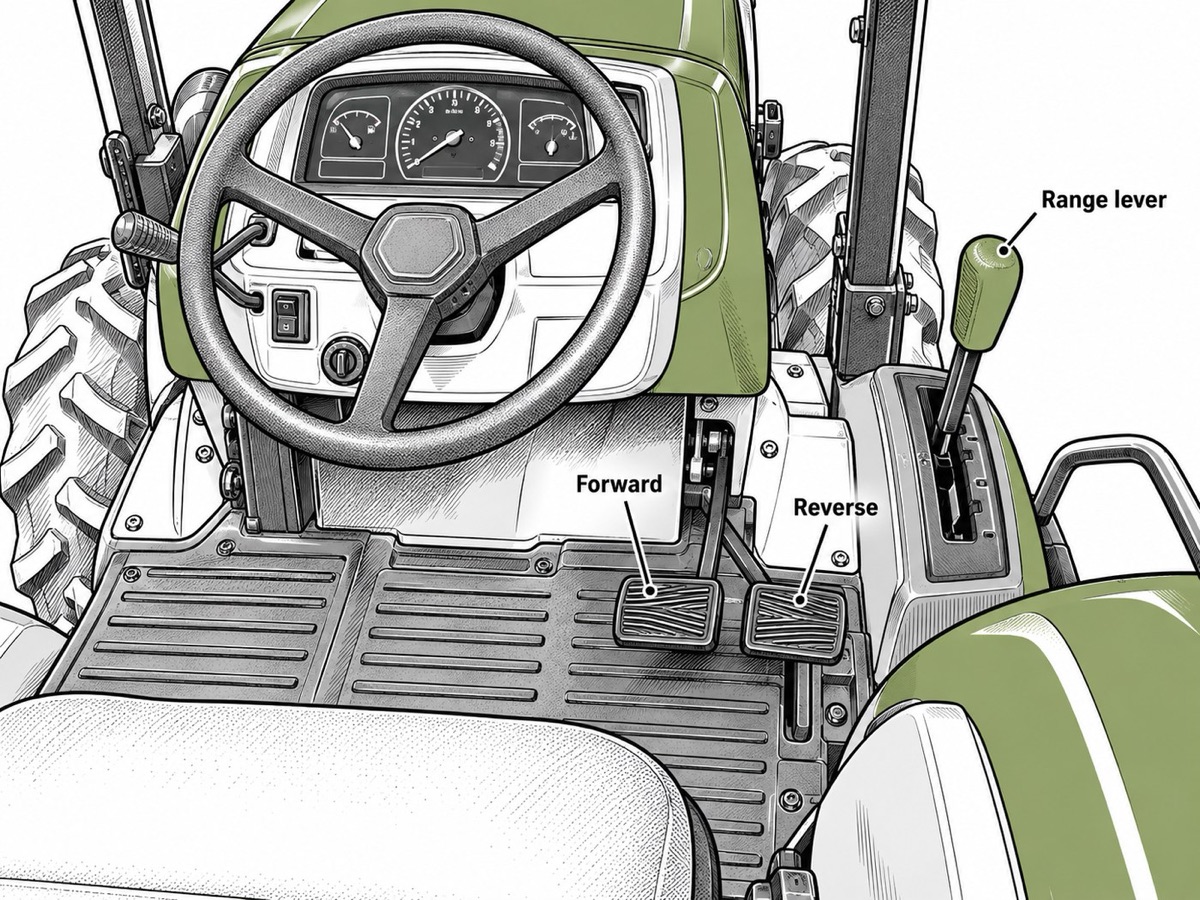
A hydrostatic transmission, HST on the sheet, puts a pump and a motor between the engine and the wheels. You lift your toe, press the other side, and the machine goes the other way with the loader still up. A gear shuttle does the same job with a lever, and your left hand has to leave the loader to reach it. Fine once. By the far end of the pile it is the thing you notice.
What you are up against is not a brand. It is a spec line that says hydrostatic and stops there: one word, no ranges, no speeds, and it closes the question before you have asked it. Kubota, Deere, Mahindra, LS and TYM are examples here, never a team.
Check 1. Count the direction changes
Stand at the pile and count one bucket: into the pile, back out, forward to the spot, back away, and write that number down.
The scene above took four, and the book labels it a scene, not a rule. Multiply your count by the buckets in your pile and the piles in your morning. No manufacturer will print that figure for your property, and it decides this. It goes on line one of the sheet.
Check 2. Copy the transmission line
Copy the transmission line off the printed sheet word for word, then copy the ranges and the speeds in each one.
It goes on line four of the transmission sheet. Both public sheets in the book specify hydrostatic on this class. As printed:
- Kubota BX23S specification, September 2026: Hydrostatic, 2 range (Low-High), single pedal toe/heel or toe/toe forward/reverse.
- John Deere commercial price page dated 4 November 2022: Hydrostatic Transmission, Infinitely Variable, 2 Speed Transaxle.
Two manufacturers, both putting direction under a foot.
- Low range, on that Kubota sheet: zero to 4.0 miles an hour forward, zero to 3.1 in reverse.
- High range: zero to 8.4 forward, zero to 6.5 in reverse.
Low range is the loader range. One range only is a question for the dealer.
HST as the default for a loader-heavy first machine is labeled an assumption in print. Gear is the better tool for long straight pulls at a set speed, and for a list that is mostly cutter hours I would pick one. Your bucket count decides this, not a page.
Check 3. Find the word independent
Run your finger down the PTO line looking for the word independent, and copy the rear rpm and the spline beside it.
A call comes into a parts counter every July. Somebody stops mowing to clear a clump, and the blades wind down every time the foot comes off. Nothing is wrong with that tractor. It has a transmission-driven PTO, and nobody said the word at the sale.
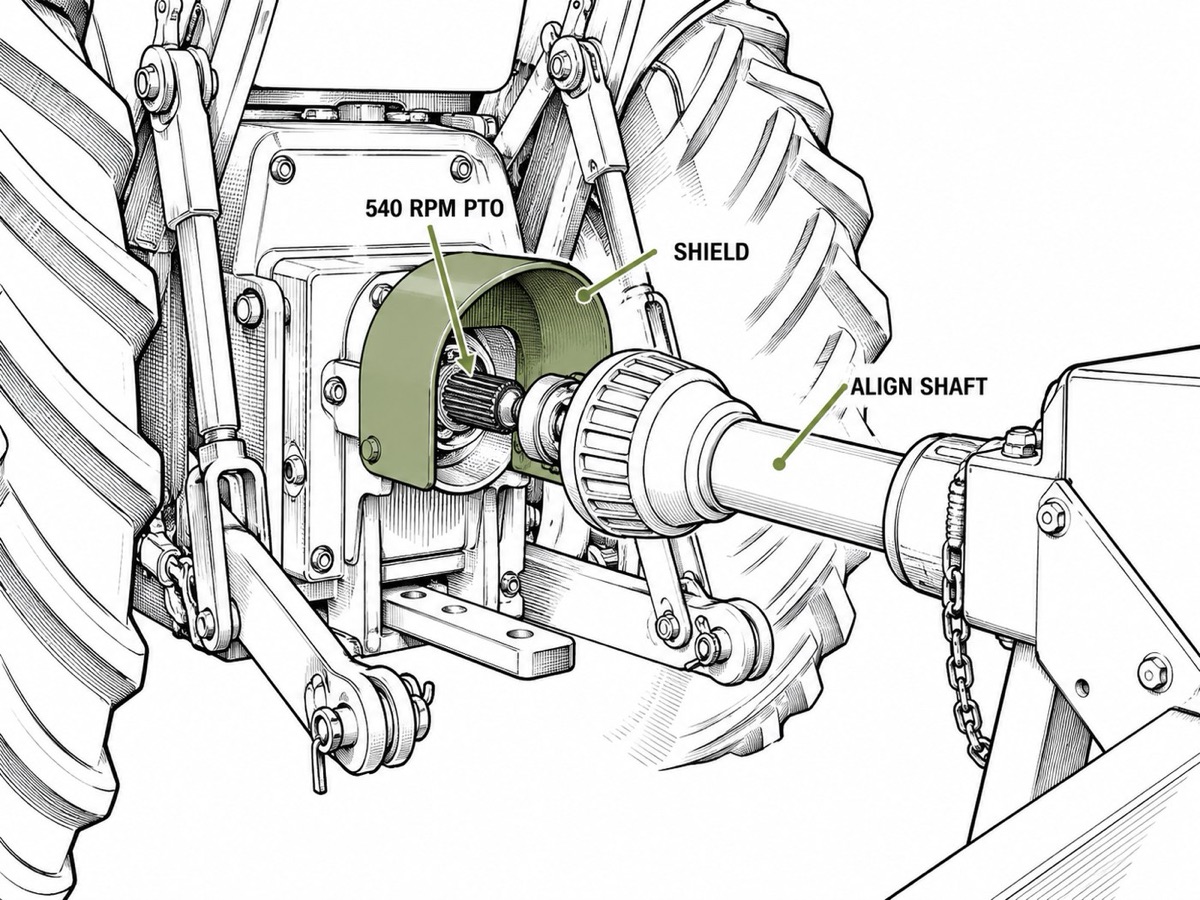
Independent means the power take-off runs off the engine through its own clutch instead of through the transmission. One sheet prints it in those words: Independent Mid and Rear PTO. You stop the tractor without stopping the implement.
Copy the numbers beside the word. One sheet lists:
- Rear PTO: SAE one and three eighths, six splines, standard 540 rpm.
- Mid PTO: USA No. 5, Kubota ten-tooth involute spline, standard 2500 rpm.
A mid-mount implement bought against the rear line will not go on.
Independent is exactly why stopping the tractor does not stop the blades. Before a hand goes near a deck:
- Disengage the PTO.
- Shut the engine down.
- Take the key.
- Wait for the blades to stop.
OSHA's agricultural fact sheet puts it the same way. The word is free to find on a sheet and expensive to assume on a lot.
Check 4. The drive line and the light rear end
Find the drive line and the differential lock on the sheet, then have the dealer put a hand on both controls.
On the sheets in the book, four-wheel drive is simply what the machine is: one lists 4WD, bevel gear front axle, non-adjustable tread spacing. But two-wheel-drive machines are still built new, and Kubota lists the L2502 as one.
The loader is what makes this matter. Lift a full bucket and weight transfers onto the front, and on a two-wheel-drive tractor the driven wheels are now the light ones. Ballast helps, and it is required: Deere prints Three-Point Hitch Ballast is Required for Stability on its own loader line. But ballast is a correction, not a cure.
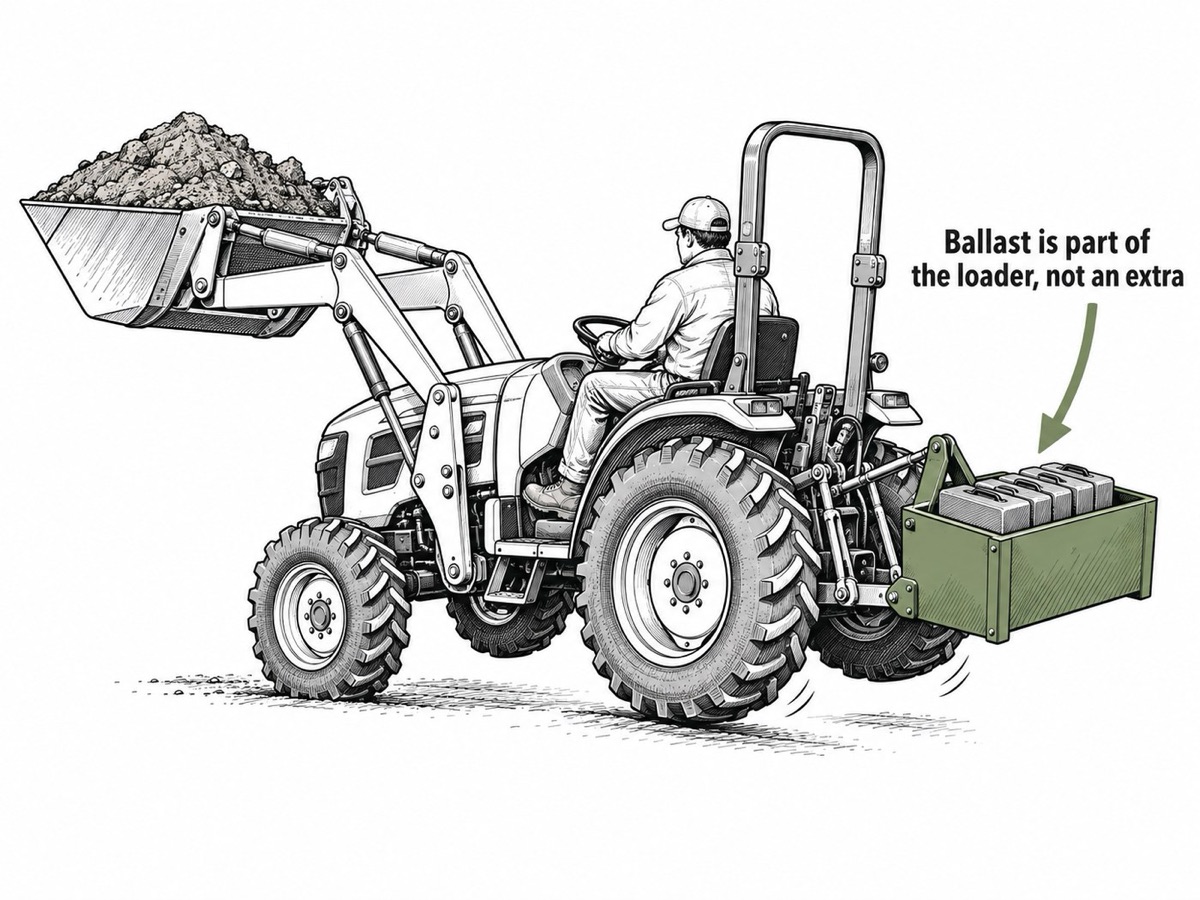
The book's default, labeled an assumption: slope, mud, or a loader anywhere on your eight-job list makes four-wheel drive the starting point. Snow on a flat gravel drive is the case that does not fit, since chains and weight over the rears clear a level lane. Drive the actual job on the actual grade before calling a cheap two-wheel-drive machine wrong.
The rear differential lock is on the same line, and the moment you need it is the worst moment to hunt for the control.
I would not buy a light rear axle and then buy weight to fix it. If a loader is on your list, start at four-wheel drive and make the cheap machine prove itself on your own ground.
Check 5. Ten cycles, both machines, one afternoon
Ask for a loader on both machines and a pile to move, then run the same cycle ten times on each.
A lap of the parking area tells you about the seat. A transmission shows itself at a direction change with a load up front, and nowhere else.
- Passing: you have stopped thinking about the transmission by the fourth cycle.
- Failing: you are still hunting for the pedal on the tenth, or you cannot hold a steady creep while the bucket curls.
Same afternoon, not two weekends apart. Memory is not a comparison. Two machines an hour apart is.
No dated source the book holds gives a figure for what HST costs over gear, so it prints none. Make the dealer quote both configurations in writing, each one dated. Those two numbers are the only price comparison about your machine.