AcreageTractorBook.com · Videos
Cab vs Canopy vs Folding ROPS: Pick by Your Climate, Not the Brochure
 From Sam Trudou's video30 September 2026
An option sheet offers three ways to sit on the machine, and the brochure will not tell you which one your winters need or your shed door allows. Here are the five checks that settle it, in order, and the one plan to walk away from.
Two things decide it, and the book puts both on one page it calls the climate sheet: the hours you will really sit on that seat, and the height of the door on the building you already own. Run it in that order and the decision mostly makes itself. Backwards, and you price a cab you cannot house.
The acre count will not help you. The book puts three deeds reading five acres on one road: horses, hardwood, and a quarter mile of driveway on a north slope. They are illustrations, labeled an assumption. The station row is where they part.
- Horse property: open or canopy.
- Woodlot: open, low branches.
- Snow: a cab, or at minimum a windshield.
Snow is the only one of the three where the station is a real purchase decision.
What you are up against carries no logo. It is the brochure photograph: a machine shot in June light under a canopy, or cold and clean behind glass. Either picture is one season standing in for twelve. Kubota, Deere, Mahindra, LS and TYM are examples here, never a team.
The climate sheet has twelve lines, filled at a kitchen table with the eight-job list beside you, a working length the book labels an assumption. The last two lines come from the dealer, dated, in writing.
Check 1. The door
Take the tape to the building where the tractor will sleep and measure the clear opening, concrete to the bottom of the header. Then the width.
Against it you hold one printed height. The Kubota detailed specification sheet for the BX23S gives height to top of ROPS as 86.2 inches, as of September 2026. One model, bar up, verified on the unit.
Two cautions, and they are the book's. Read that height off the printed table inside the PDF, because the file's text layer can hand you a value attached to the wrong label. And no sheet in the book prints a folded height. You take that one yourself.
If the tape and the sheet disagree, the machine wins.
Check 2. Hours, not jobs
Mark the snow jobs on your eight-job list, then write the hours you will sit on that seat between December and March. In the dark. In wind. Then do the same for July, honestly.
Jobs are not the question here. One maker's own series page sells this class into five uses:
- Equine
- Hobby farming
- Landscaping
- Property maintenance
- Snow removal
Five owners, one page. Only one of them is buying glass.
A cab is bought with winter hours. A canopy is bought with summer hours. An open station with a folding roll bar is what the machine already comes with.
I would write those two hour numbers down before I let anybody walk me over to a cab. Jobs do not buy glass. Hours in the dark and the wind buy glass.
Check 3. Three stations, and what they cost on one real sheet
Read the option names off the sheet in full, then have the dealer write the cab line and the canopy line with today's date. Not the first word. All of it.
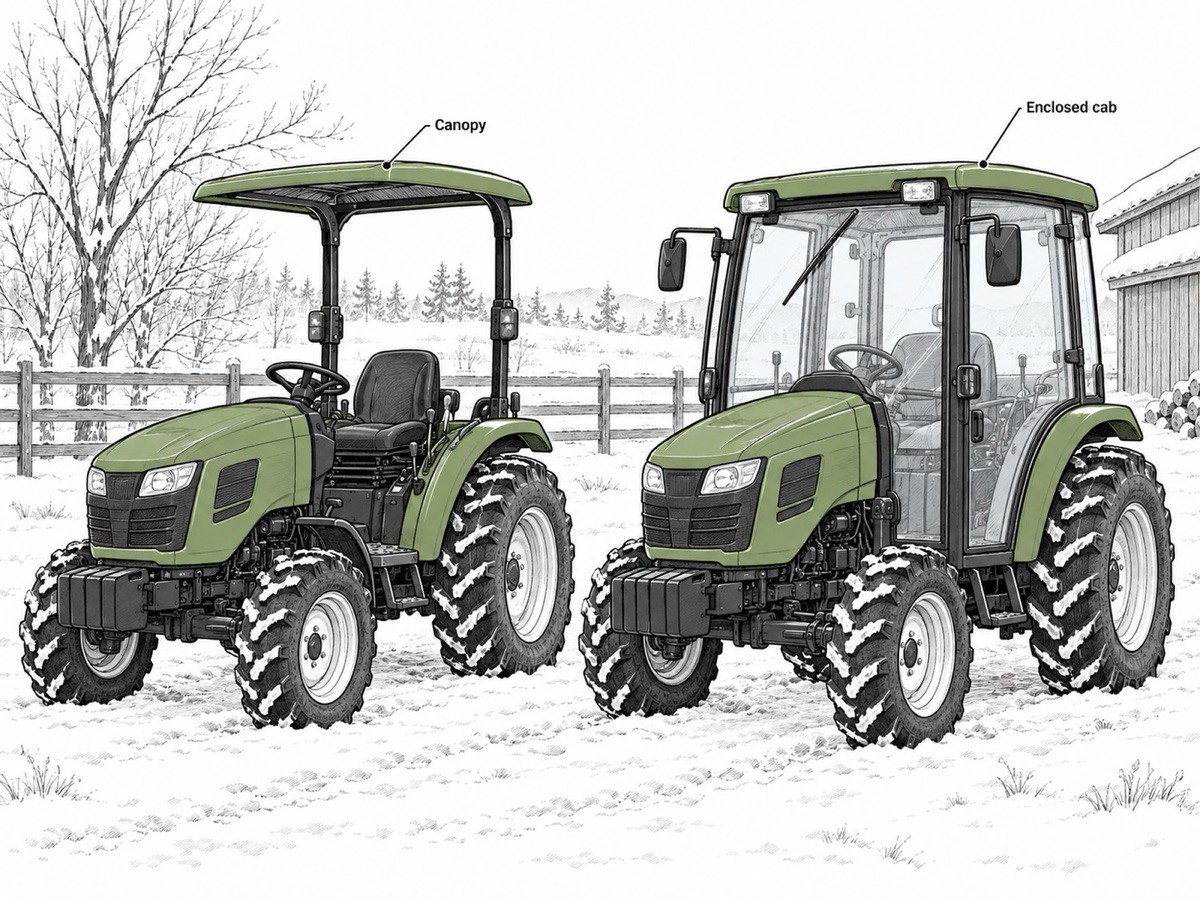
The canopy is a roof on posts: shade, and some rain off your hat. No walls, no glass, no heater, no wiper. Here is how the three stations read on one real price page:
- Option 2000: open operator station, two post folding ROPS meeting the OECD code 7 standard, deluxe seat with mechanical suspension. In the base price.
- ShadePro designed canopy, part BXX10589: $668.80.
- Rigid plastic canopy kit, LP64809: $463.95.
- Option 2053, cab, heat only, with front work lights, a front wiper with washer, two exterior mirrors and a 55 amp alternator: $7,851.00.
Heat only means heat only. Air conditioning is a different line.
Three figures, one page: the John Deere Tractors 1000-4000 CUTs commercial price page, code 028NLV, dated 4 November 2022. One model, one day, four model years stale, and not your quote. Verify at the dealer and on the plate. Read it as a shape.
The Kubota side of the book has no cab figure and will not invent one. Its specification sheet lists the cab as not applicable, and the series page calls it an optional dealer-installed cab with no price. Dealer-installed and factory are two different purchases. Ask in writing who services the heater, and whether it still fits your door.
Check 4. What the cab cancels
Ask the dealer to put a finger on the compatibility line on today's sheet, beside the cab option, and initial it.
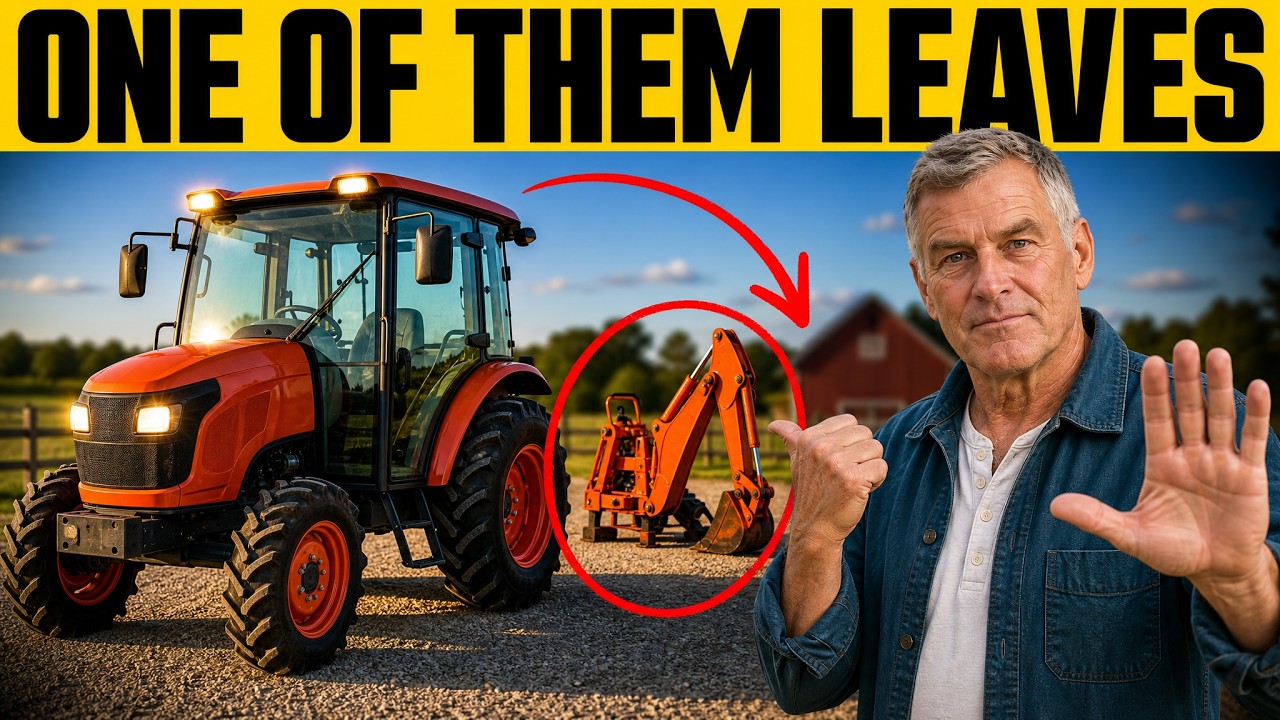
A cab is not a hat you put on the tractor, and that same November 2022 page says so in its own words: "Factory installed cab comes equipped with loader frames", and "Not compatible with backhoe." On that sheet, a cab and a backhoe do not go on one tractor. If a backhoe is on your eight jobs and a cab is on your wish list, one of them is leaving.
It is not a one-off. On the same sheet, the note under the tire chains reads "Not Compatible with Backhoe installed due to interference with backhoe subframe." The option sheet is the only place in the building that admits this.
If the dealer will not put a finger on the line, treat the option as unconfirmed and do not sign for it. That conflict never shows up in a photograph or on a test drive.
Check 5. The roll bar is a certified structure
Fold the bar down once at the dealer, put it back up, and check that the belt latches and retracts at the seat.
A ROPS is not a bar somebody welded up. The Deere line reads two post folding ROPS, meets OECD code 7 standard. Kubota calls its own a factory certified two post foldable ROPS with retractable seat belt. Certified and foldable in one sentence: the joint is part of the design. Down is for a low door and for storage. Up is for work.
OSHA's agricultural standard, 29 CFR 1928.51, covers tractors built after October 25, 1976. Where it requires a rollover structure for an employee-operated tractor, it requires the seat belt with it, worn while the tractor is moving and tightened enough to keep the operator inside the protected zone.
That is an employer standard, and a landowner mowing his own five acres is not an OSHA employer. It matters anyway. OSHA's agricultural fact sheet, 3835, puts both halves together: the structure makes a zone of protection, and the belt keeps you inside it. The manual governs when that bar folds, and it outranks this page.